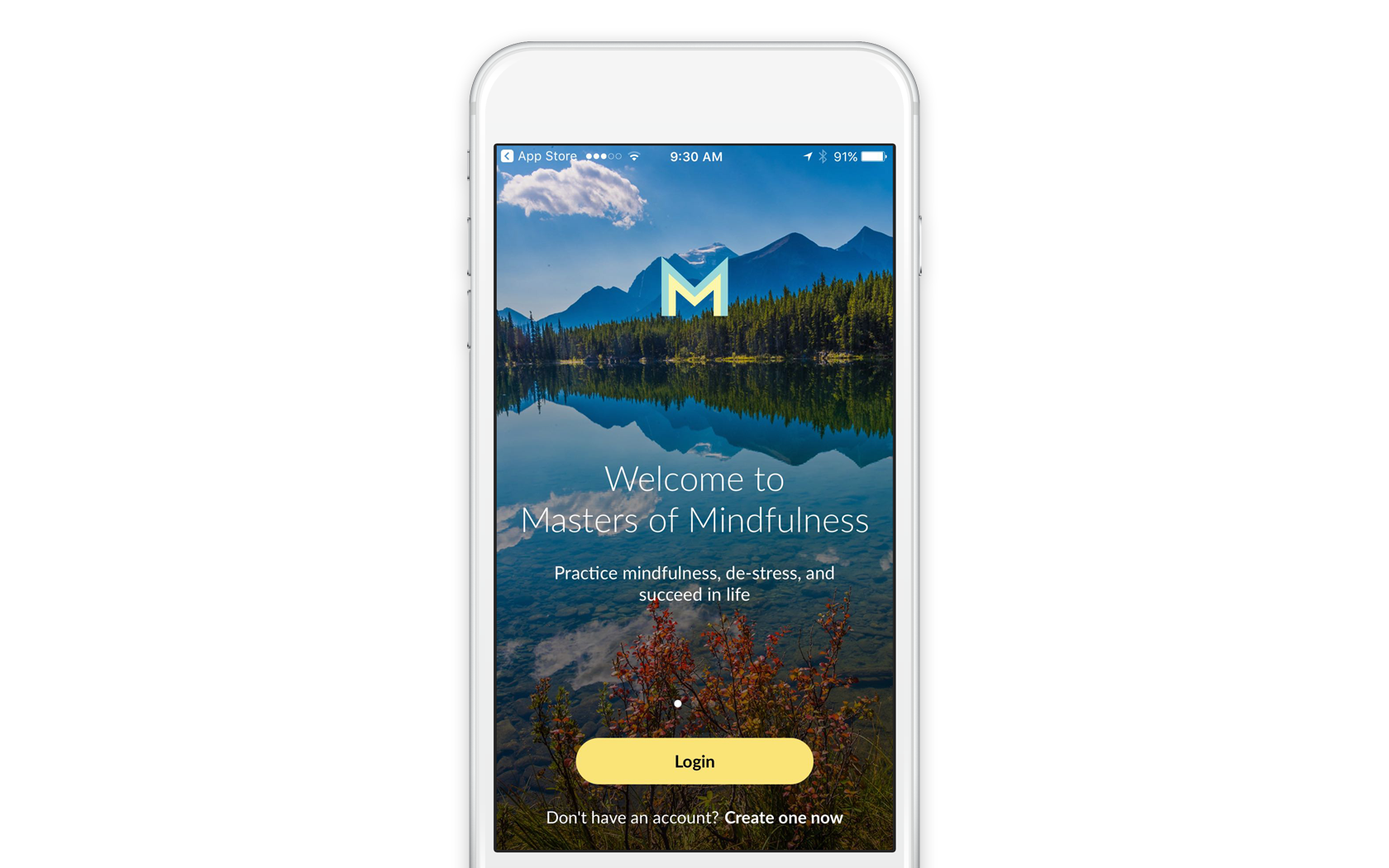
The Exceptional Life Institute provides guidance on various aspects of personal growth, helping individuals navigate their aspirations in life.
Masters of Mindfulness is a mobile app designed to help people achieve mental clarity, emotional balance, and lasting well-being.
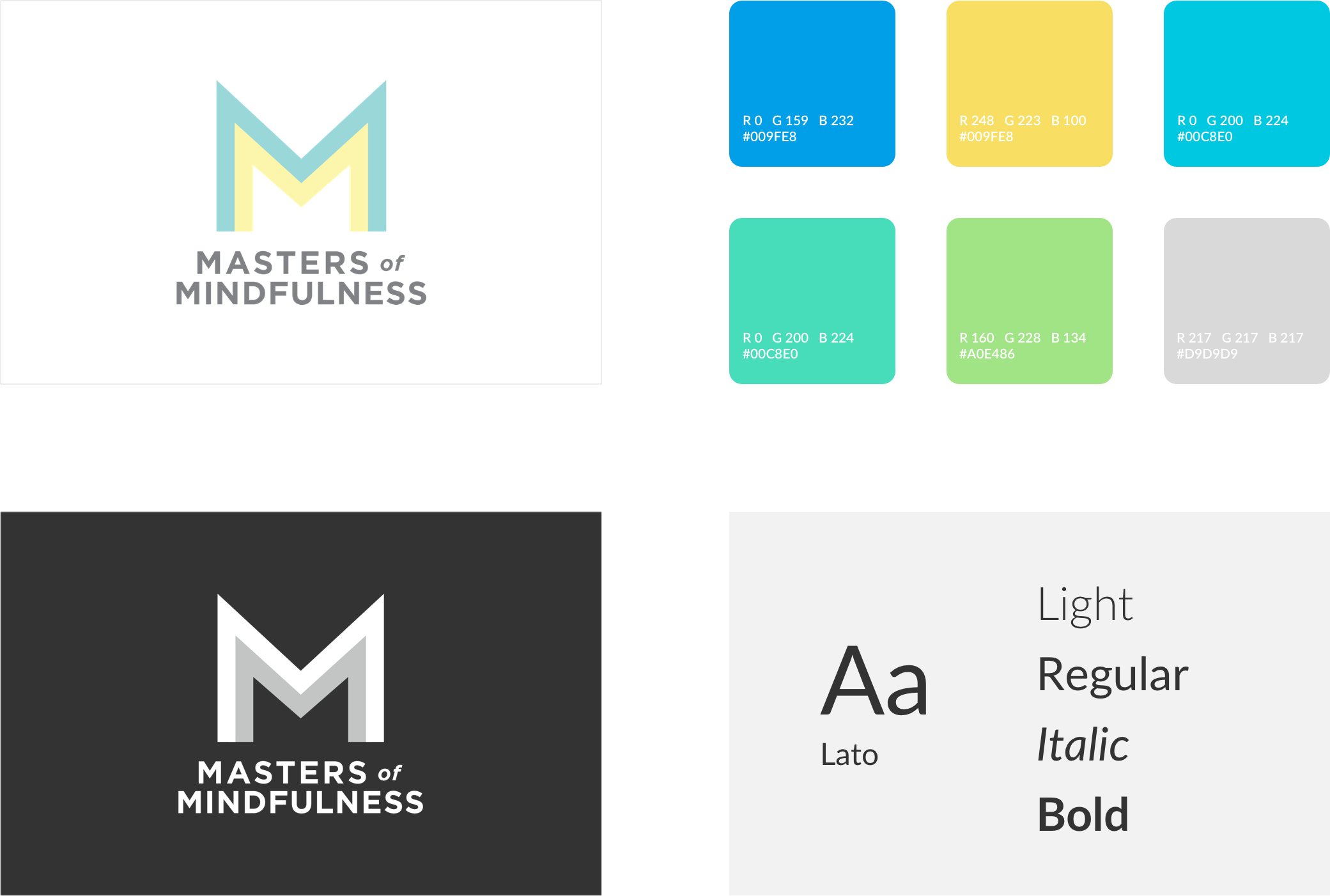
I was contracted to design the UI/UX of the mobile app and to develop branding and marketing campaigns.
By the mid-2010s, mobile apps like Aura, Calm, Headspace, Simple Habit, and others brought mindfulness and meditation into the mainstream. However, most of these solutions addressed only narrow aspects of well-being, such as relaxation or guided breathing, leaving users to piece together their mental health journey across multiple tools.
Users seeking deeper, more sustained personal growth often found themselves lacking a unified experience, one that could support mindfulness alongside habits like gratitude, focus, and emotional reflection. There was a clear need for a more holistic approach to mental wellness, one that could evolve with the user's journey and integrate multiple self-care practices in a meaningful way.
Recognizing the gap in holistic wellness solutions, the Exceptional Life Institute set out to create Masters of Mindfulness, a mobile app designed to guide users through a complete mindfulness journey using a variety of self-help tools. The vision was clear, but the challenge lay in making that vision feel effortless, engaging, and emotionally resonant within a mobile experience.
As the designer, my focus was on translating a broad set of feature ideas into a cohesive, user-centered design that felt calm, intuitive, and supportive across every interaction. Key areas of focus included:
From the start, my client was transparent about the project's budget limitations, resource constraints, and tight timeline. With this in mind, I kicked off the research phase by conducting open-ended, semi-structured interviews with a select group of 5 users provided by the client, with both males and females aged between 20s to 50s. My goal was to gain a deeper understanding of the target audience while also learning more about the broader practice of mindfulness. During the interviews, I also learned about users' experiences with similar meditation apps like Headspace and Calm, which provided valuable insights into their motivations and pain points.
Through these interviews, a couple of key insights emerged. Users expressed a strong desire to integrate mindfulness into their daily lives, stay motivated, and see it as more than just a tool for relaxation. They were looking for an app that could help them cultivate a deeper sense of personal growth, self-awareness, and purpose. These insights led to the creation of user personas, one of which was named Diana, and this persona became central to our design process. By focusing on her preferences, motivations, and challenges, we ensured that the app would meet real user needs.
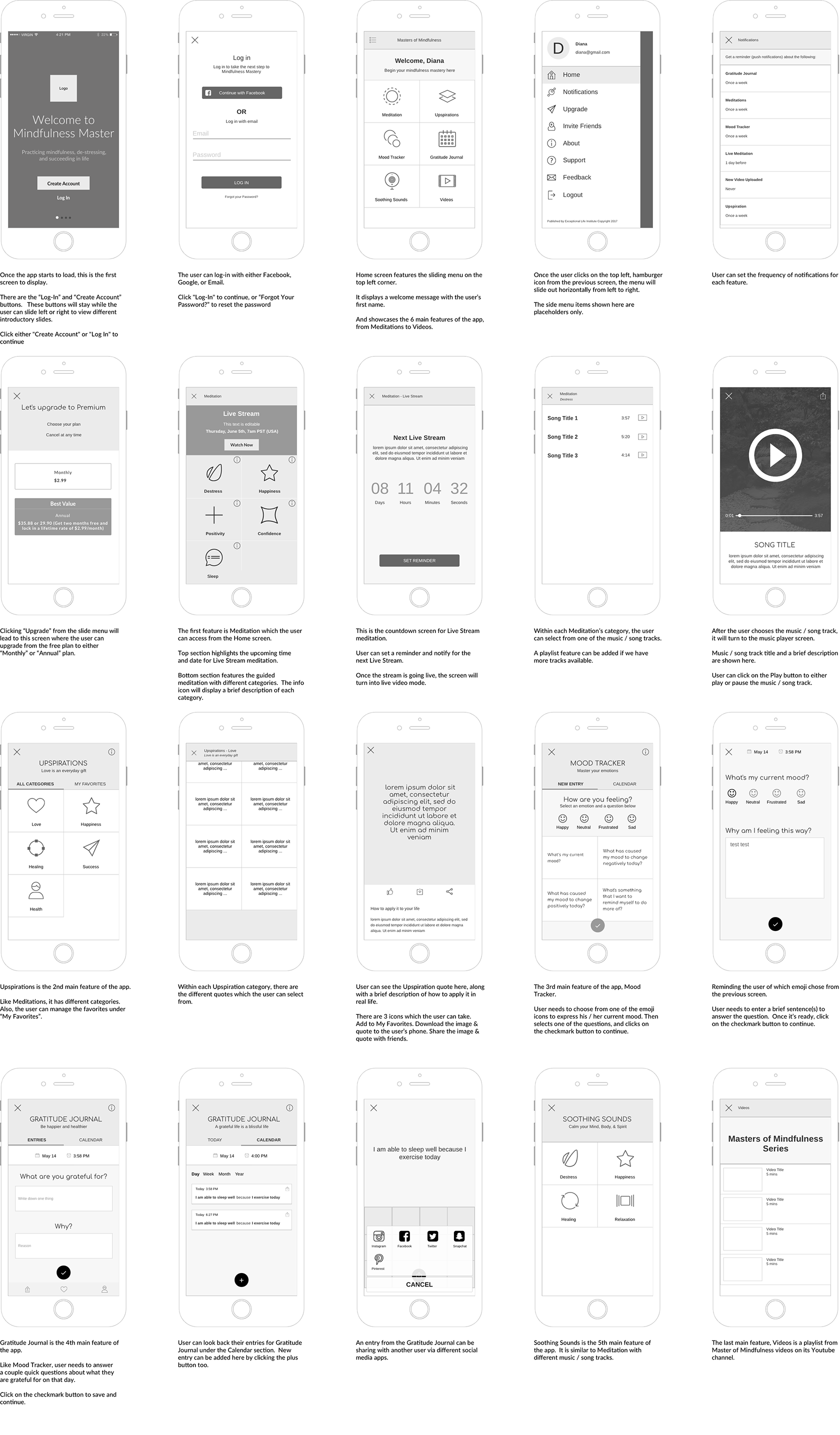
With user personas in mind, we brainstormed a variety of self-help tool solutions to meet their needs and align with their expectations. For example, we planned to offer live-stream meditation, a library of recorded meditations, a mood tracker for improving thinking habits, a healing song library, and video interviews with health and healing practitioners, among other features.
The personas guided our empathy-driven approach to idea generation. We mapped out the different self-help tools in user flow with wireframes, illustrating how users would navigate the app and interact with its features. This helped inform the selection of key functionalities, such as the Mood Tracker and Soothing Sounds, both designed to encourage consistent engagement and foster an ongoing connection to mindfulness practice.
In collaboration with the client and the test users they provided, we went through multiple rounds of iteration, incorporating their feedback, especially on key features like the Mood Tracker. Once the designs were approved, I proceeded to create high-fidelity mockups based on the unified design approach for both iOS and Android.
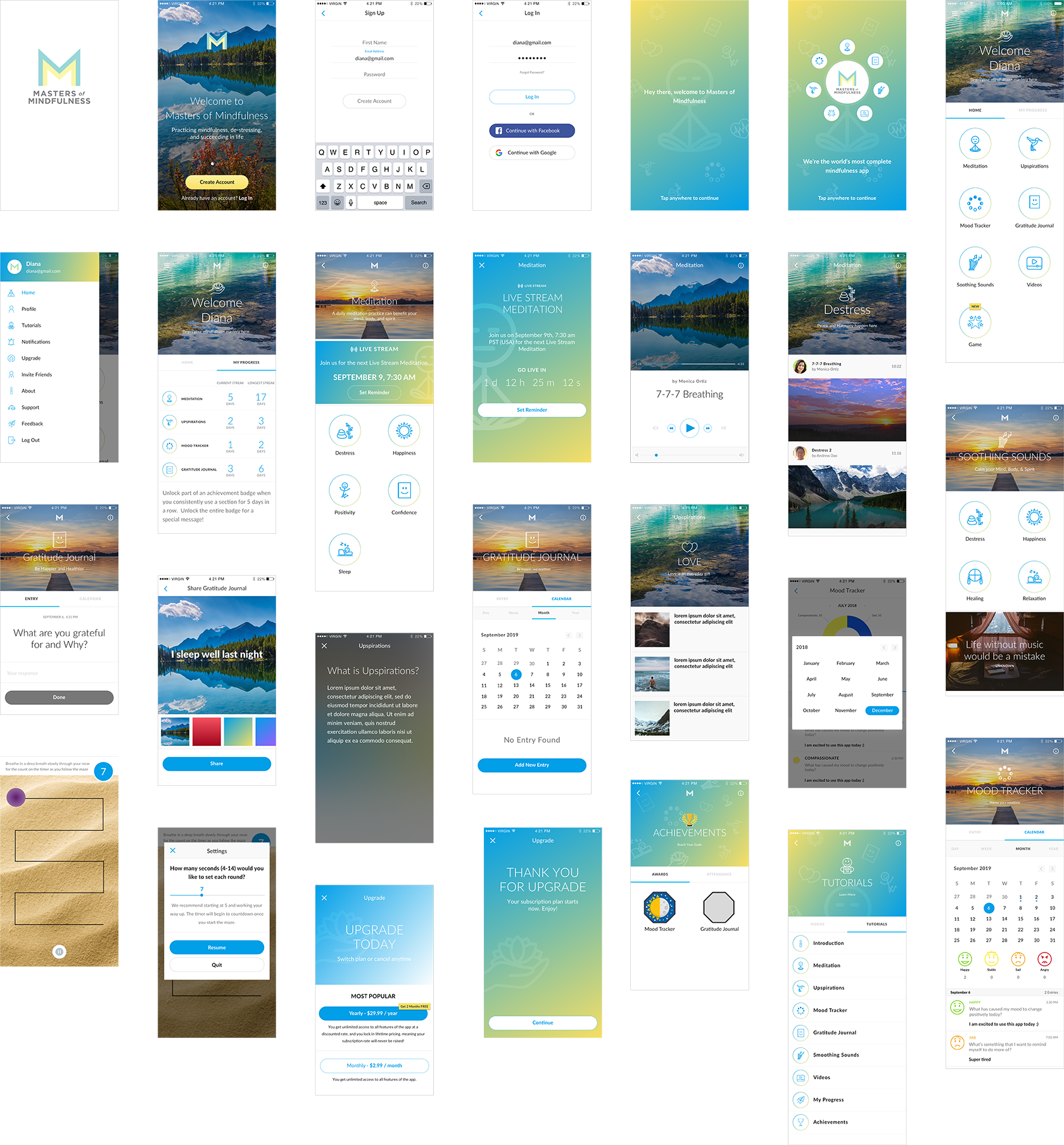
Due to budget and resource constraints, the client chose to prioritize consistent UI design across both iOS and Android platforms, while focusing on delivering a lean and efficient MVP. This strategy enabled us to monitor user engagement on both versions, control costs, and simplify maintenance for engineers managing both platforms simultaneously.
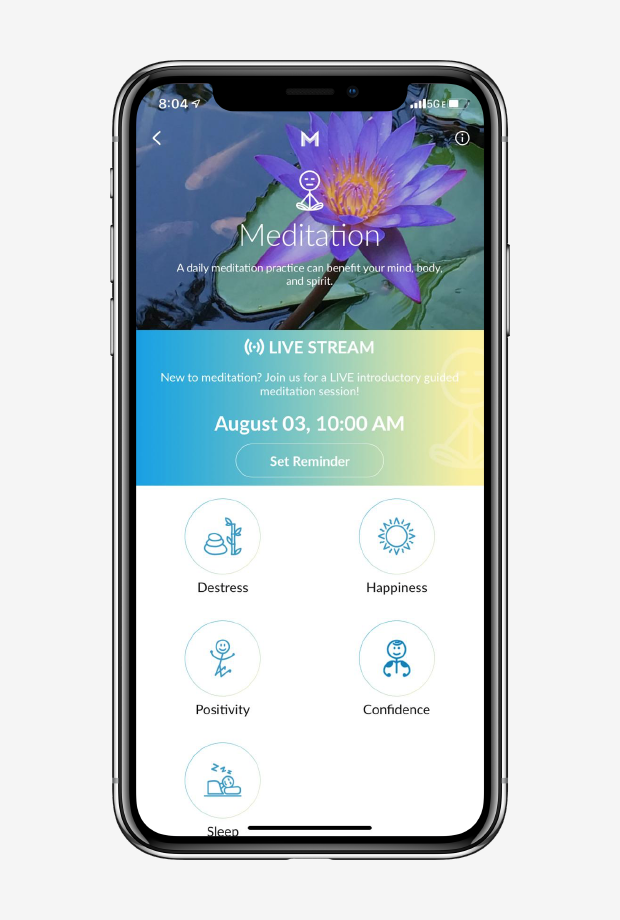
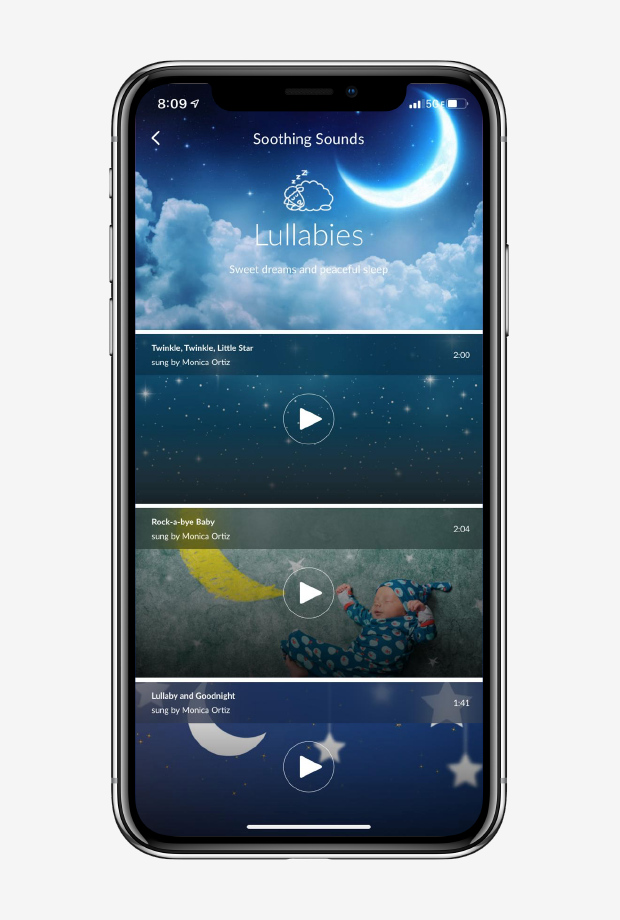
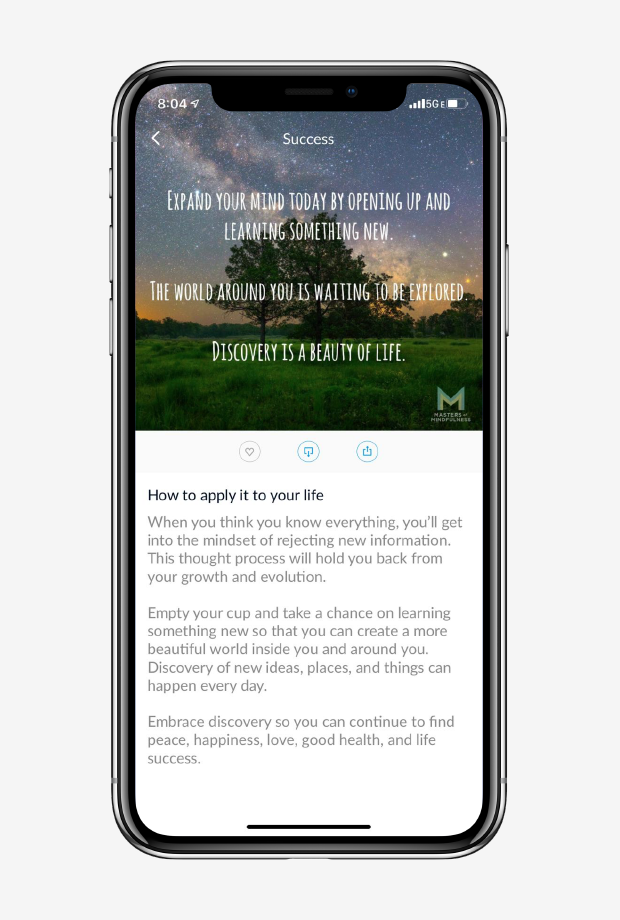
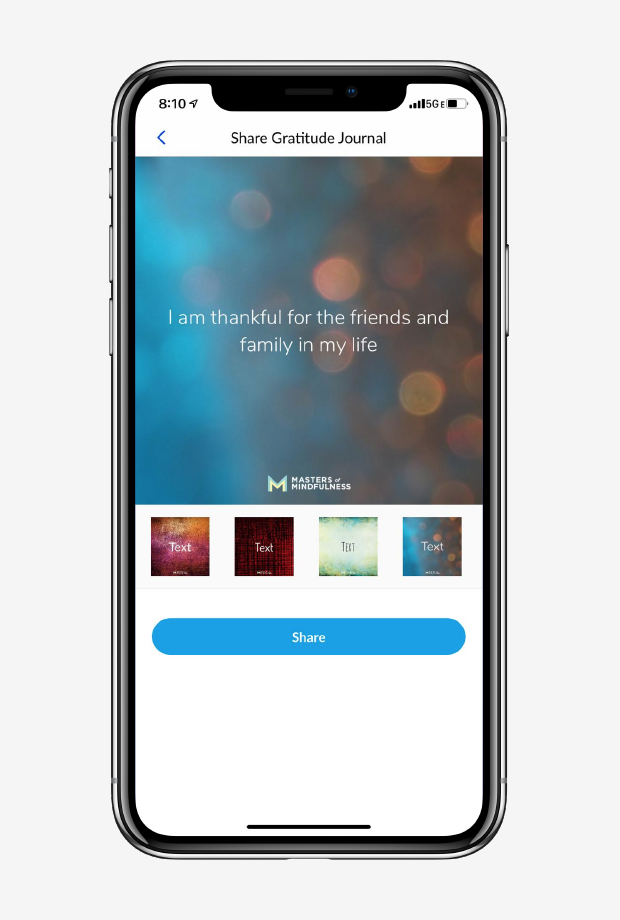
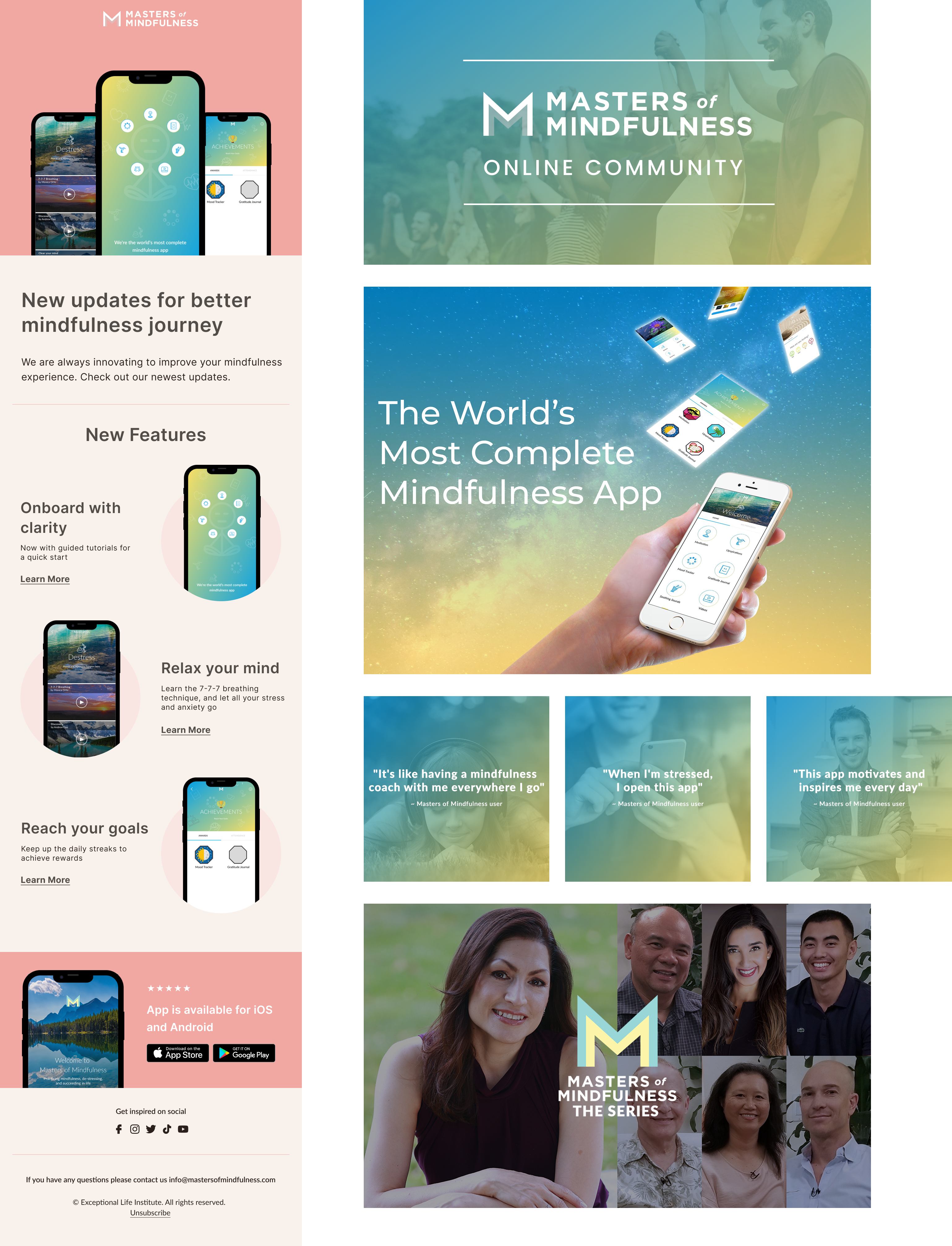
After launching the MVP on both iOS and Android, the app surpassed 6,000 total downloads within the first three months, a strong start considering the minimal initial marketing, with most users coming from iOS. We later expanded our marketing efforts through email subscriptions, Facebook ads, podcasts, and more, which steadily improved the download conversion rate, with iOS achieving an impressive overall average of 36%.
iOS also maintained a respectable 5.3% paid conversion rate. Most importantly, user feedback was largely positive, particularly around product features, usability, and overall experience. Over time, these insights helped our team define new features and further refine the app to better meet user needs.
Given the limited time and budget, I was proud of what we achieved with this 0 to 1 product. Despite the high number of competitors in the wellness, mental health space, the app gained a solid number of downloads and a respectable paid conversion rate. Three years later, the client decided to refresh the app’s look and feel while keeping most of the original features and design layouts. Although I couldn’t lead the redesign due to other commitments, I provided design direction and supported the marketing efforts.